The Core Idea
Your mind doesn’t treat time evenly. It assigns salience—importance, “this counts,” “this will change me”—across a window of time around the present.
Some systems spread salience out across a wider window: more of the recent past stays “live,” and more of the near future is pre-loaded as expectation. In that kind of system, new information lands like a small adjustment to something already buffered.
Other systems concentrate salience tightly around right now. The present is sampled at higher resolution, with higher gain, and with less buffering. In that kind of system, new information doesn’t just “add” to the model—it re-weights the model. Same stimulus, bigger update.
That’s the whole story: change feels larger when the present carries more of the total weight.
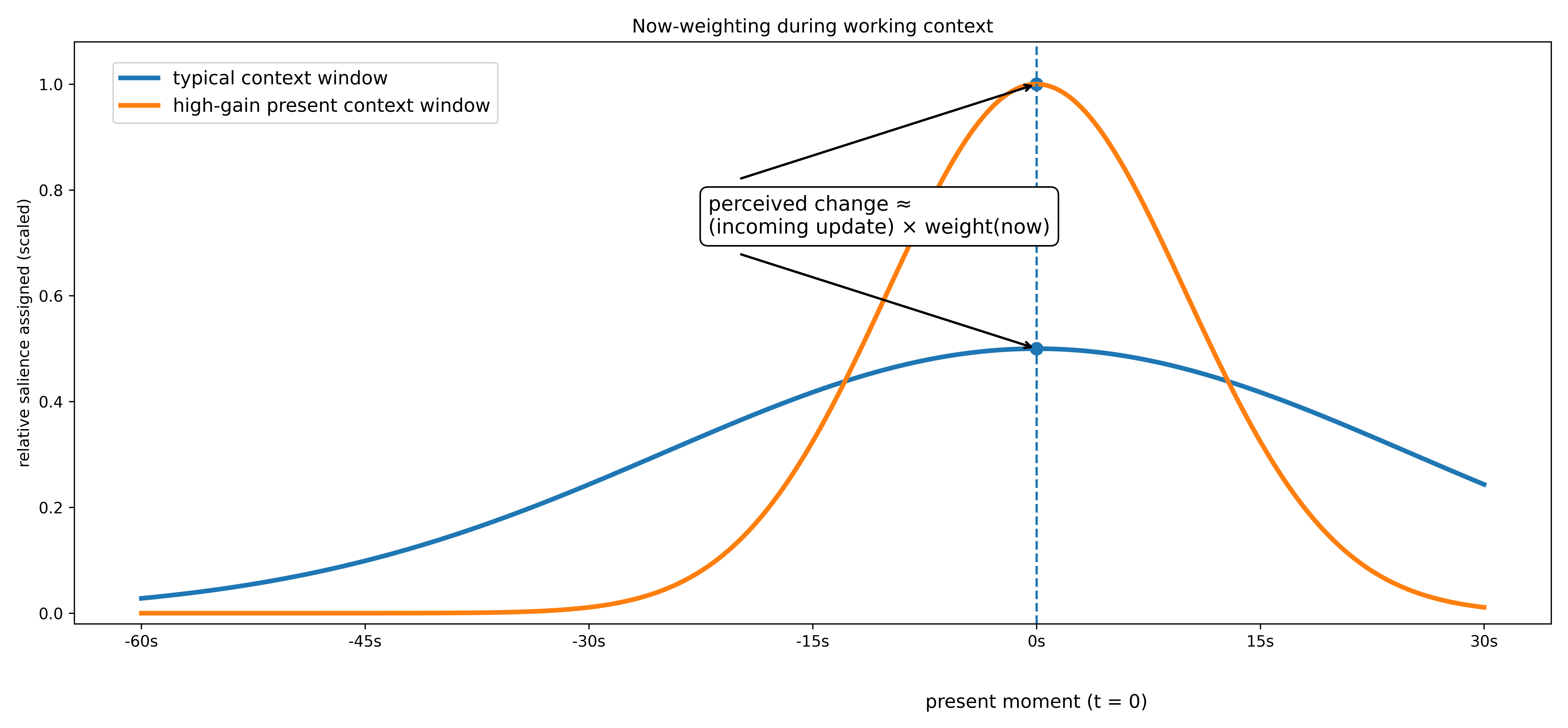
Figure 1. A visualization of how salience is distributed around the present during working context.
Image 1: The Two “Now-Weighting” Curves
The curve plot is a model of a “now-weighting function.”
x-axis: time relative to the present moment (t = 0)
y-axis: how much salience your system assigns to that time offset
The wide, lower curve (“typical context window”) means: lots of surrounding context stays active, so the system is harder to knock off its current trajectory.
The narrow, taller curve (“high-gain present context window”) means: the system is extremely sensitive to what’s happening right now. The same incoming event produces a larger perceived update because it’s being multiplied by a higher weight at t = 0.
That’s why the annotation makes sense:
perceived change ≈ (incoming update) × weight(now)
It’s not claiming a literal equation—just pointing to a structural fact: a higher-gain present turns ordinary inputs into bigger internal reconfiguration events.
Image 2: The Multi-Scale “Integration Windows” Atlas
The second image generalizes the same idea across layers of life that run on totally different timescales.
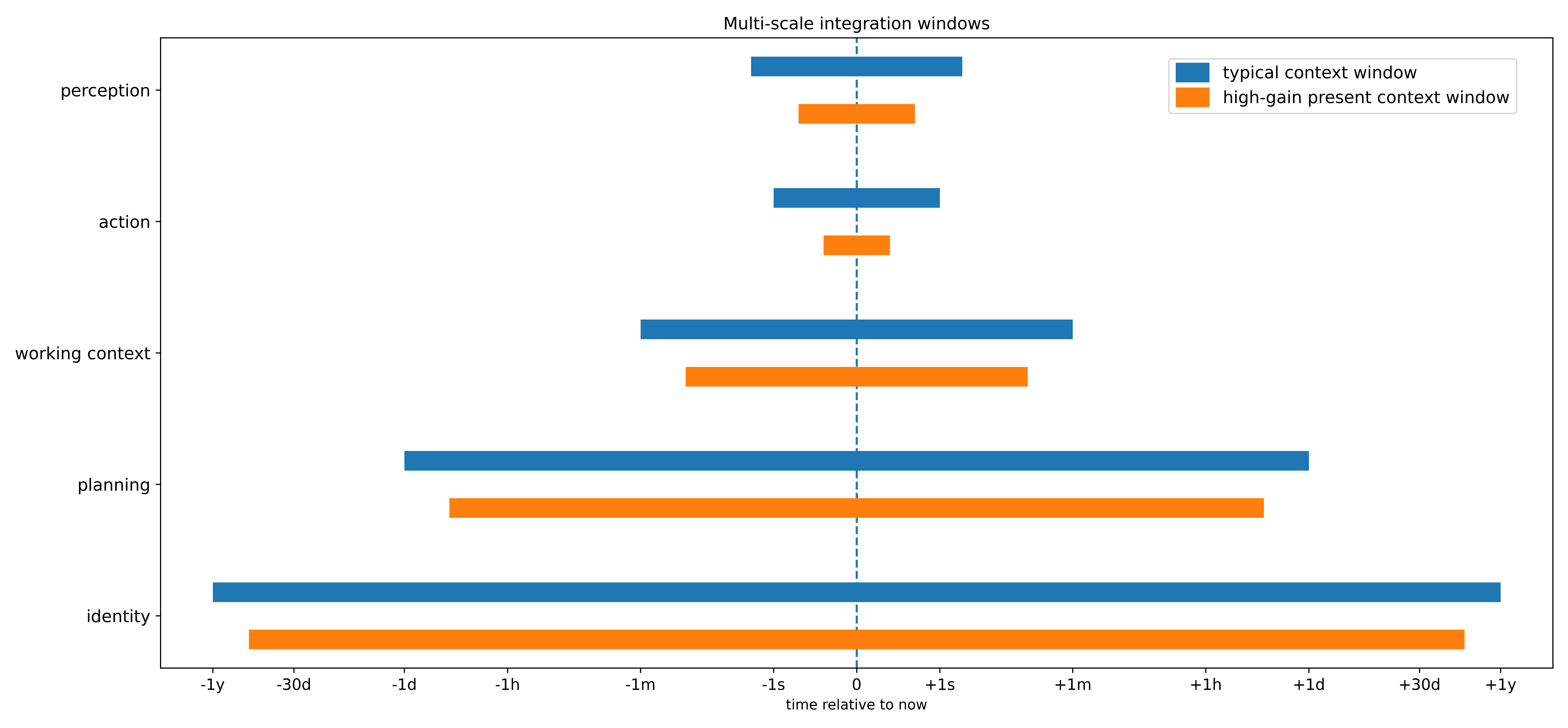
Figure 2. The same idea, but zoomed out: multiple stacked ‘presents’ across different timescales.
Instead of curves, it shows context windows as horizontal bars centered on “now,” across domains like:
- perception (seconds)
- action (sub-seconds to seconds)
- working context (tens of seconds to minutes)
- planning (hours to days)
- identity (months to years)
It’s one picture of a basic truth: you don’t have one “present.” You have multiple presents—stacked, nested, and running at different temporal resolutions.
And the comparative point is simple: a narrower window makes you more responsive, but it also makes you more deformable.
So “change” doesn’t just mean learning new information; it can mean becoming a different shape fast.
Why This Matters in Plain Language
If someone has a broader window, they can absorb novelty without feeling like it rewrites them.
If someone has a high-gain present, novelty can feel like:
- identity motion (who am I now?)
- reality motion (what even is going on now?)
- and sometimes threat motion (am I safe now?)
This is where awe and fear sit next to each other. Awe is “the world is big.” Fear is “the world is big and I can’t afford to be wrong.” A narrow high-gain present makes “wrong” feel expensive because there’s less buffered continuity to dilute it.
The Hidden Thread: Revocability
There’s an additional implication hiding behind these graphs:
If your system updates hard in the present, then what you need most isn’t reassurance or persuasion. What you need is revocability—the felt knowledge that this moment won’t be used to trap you.
That’s why being offered an opt-out is such a big deal: it reintroduces reversible time in the commitment channel. It says: “your shape is allowed to return; this interaction doesn’t have to become permanent evidence.”
So the images aren’t just “how attention works.” They’re also an ethical diagram: the difference between environments that allow a system to self-stabilize, and environments that force it to lock in.
So What Does This Mean?
It means: two people can be equally intelligent and equally sincere, and still experience the same situation as totally different magnitudes of change—because their salience is distributed differently across time.
One mind drifts. Another mind phase-shifts.
And once you see that, a lot of “overreaction / underreaction” moralizing starts to look like a category error.

